
Partner Spotlight
New report calls for urgent change in LGBTQIA+ mental health care
Written by: SEL Mind
A new report “Amplifying LGBTQIA+ voices to influence change in mental health service delivery,” sheds light on the significant challenges LGBTQIA+ people face when accessing mental health services.
The report was commissioned as part of the Queer Finds project, and was a collaborative effort by South East London Mind, Impact on Urban Health, and the Health and Social Equity Collective.
Diego Garcia, who heads the Queer Finds project, said, “This report makes clear that LGBTQIA+ people continue to face systemic barriers when trying to access mental health care. It is not enough to acknowledge these issues. We need urgent systemic change co-designed with our communities to ensure mental health services are safe, inclusive and responsive to their needs”
What are the findings?
The findings are stark. The report reveals a widespread experience of discrimination and a deep-seated frustration with the current state of mental healthcare.
For instance:
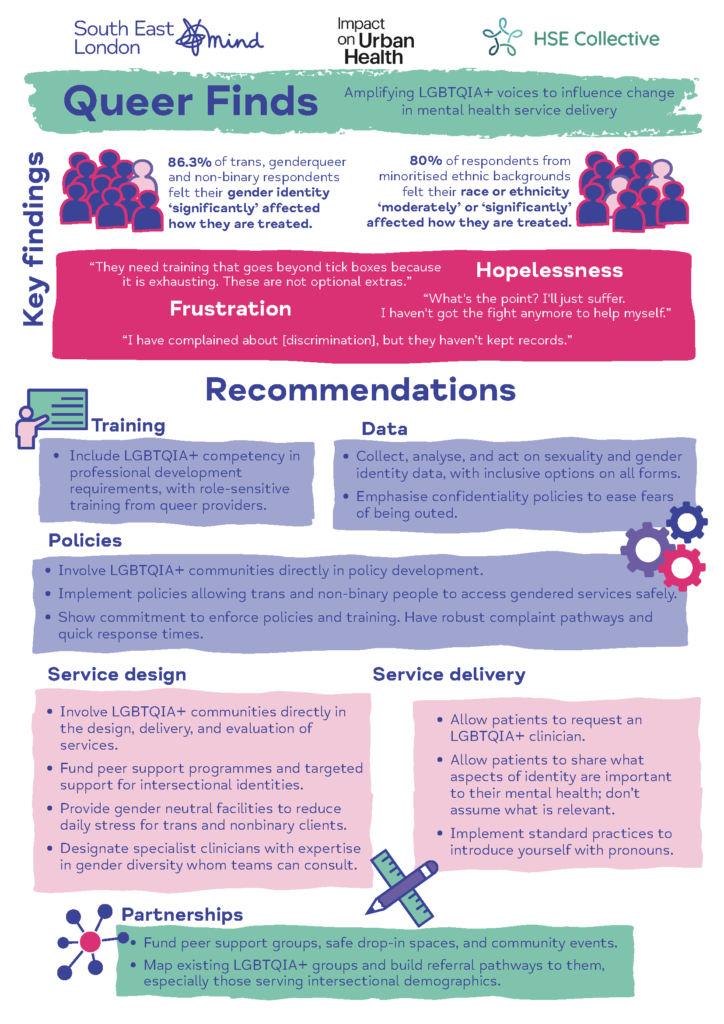
86.3% of trans, genderqueer, and non-binary respondents reported that their gender identity “significantly” affected how they were treated.
Similarly:
80% of respondents from minoritised ethnic backgrounds felt their race or ethnicity “moderately” or “significantly” impacted their treatment.
This discrimination leads to a feeling of hopelessness and a lack of trust in the system.
As one respondent said, “What’s the point? I’ll just suffer. I haven’t got the fight anymore to help myself”. Another shared their frustration, saying, “I have complained about [discrimination], but they haven’t kept records”. These powerful quotes highlight a system that not only fails to provide adequate care but also lacks accountability.
Recommendations for a better system
The report provides a comprehensive set of recommendations aimed at creating a more supportive and affirming mental health landscape. These recommendations focus on four key areas:
- Training & Policies: The report emphasises the need for training that goes “beyond tick boxes”. Recommendations include making LGBTQIA+ competency a requirement for professional development and hiring queer providers to deliver in-depth, role-sensitive training. It also calls for involving LGBTQIA+ communities directly in policy development and showing a clear commitment to enforcing these policies with robust complaint pathways.
- Data and Services: To address the lack of understanding, the report suggests that services should collect, analyse, and act on data related to sexuality and gender identity. The report also recommends implementing standard inclusive practices, such as providing gender-neutral facilities and introducing yourself with your pronouns. Furthermore, it suggests providing targeted support for the most vulnerable groups, like LGBTQIA+ people of colour and transgender people.
- Specialised Care: A crucial recommendation is the designation of specialist clinicians with LGBTQIA+ expertise. These specialists can provide direct care or serve as a resource for other teams. The report also suggests creating pathways for patients to request support from LGBTQIA+ practitioners or those who have met specific competency training thresholds.
- Partnerships: The report highlights the importance of building strong relationships with existing community and grassroots organisations.
- Funding groups, especially those serving intersectional communities, and building referral pathways to them. This approach recognizes the vital role these organisations play in providing safe spaces and peer support programs.
The Report is a powerful call to action for mental health services to not only listen to but also actively partner with the LGBTQIA+ community to create a system that is truly safe, supportive, and effective for all.
Please feel free to share The Report with family, friends, colleagues and community members. If you are a mental health professional, please get in contact with queerminds@selmind.org.uk for a more detailed report.
Work with us
Be part of our mission to create equitable health and social care systems. Together, we can make a difference.